
13 Nights - Iceland, Greenland & Nova Scotia
from $3180 pp
Group Gay Men & Women
Departs from Cape Liberty, New Jersey on June 18, 2028 returning July 01, 2028
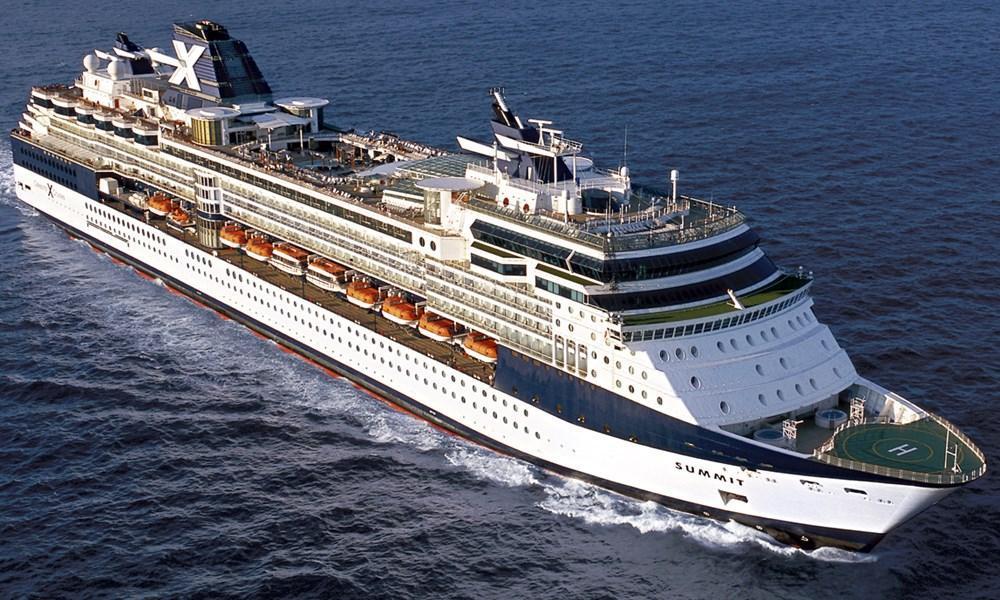
Celebrity Cruises - Summit
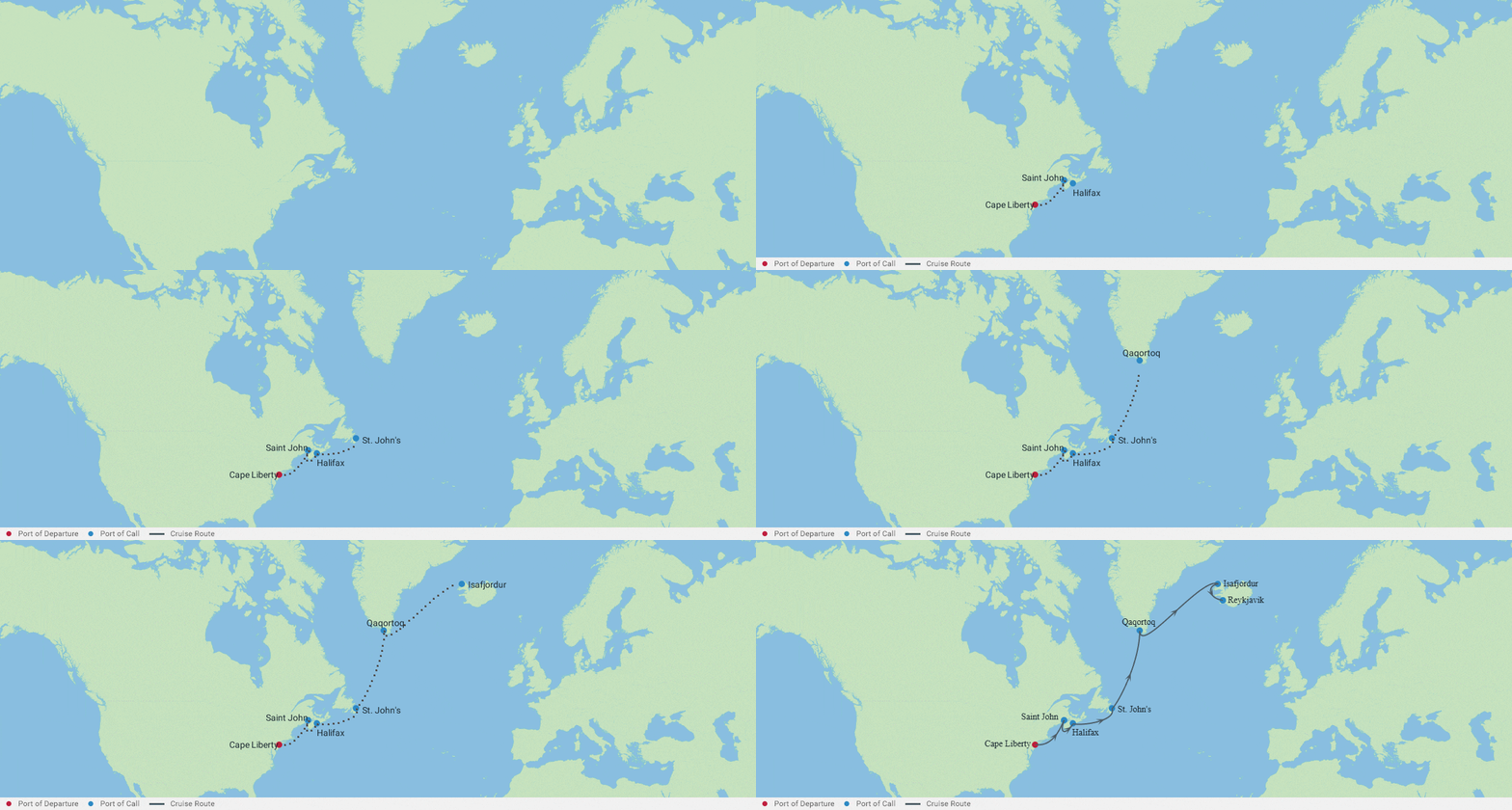
Bayonne/Cape Liberty • Saint John, New Brunswick • Halifax • St. John’s, Newfoundland • Qaqortoq • Isafjordur • Reykjavik
Aquafest Does Not Accept Electronic Transmission of Credit Cards.
This Annual Departure is one of Celebrity Cruises First Sailings To SELL OUT!
Cape Liberty, New Jersey
Cape Liberty Cruise Port is located at the northeast corner of the former Bayonne Military Ocean Terminal, now renamed The Peninsula at Bayonne Harbor, a 430-acre, man-made peninsula that extends into New York Harbor. Future plans for the Peninsula at Bayonne Harbor call for a vibrant mixed-use waterfront development comprised of residential, light industrial and office space, film studios, a riverwalk and extensive recreational and park areas.
The new cruise port offers guests outstanding views of the harbor, the Verrazano Narrows Bridge, the Statue of Liberty and lower Manhattan.
At Sea
Enjoy the whole day at sea.
Saint John, New Brunswick
Saint John is a spectacular commerical port at the intersection of the St. John River and the Bay of Fundy.
Visitors will be exhilarated by the pounding surf and sounds of the world's highest tides, best viewed at Reversing Falls.
Saint John features a climate-controlled pedway system, allowing the utmost comfort as you visit attractions including the Canada Games Aquatic Centre and Old City Market.
Halifax, Nova Scotia
Halifax is perfect for exploring on foot, with tree-lined streets, inviting sidewalk cafes, and museums in a park-like waterfront setting. Discover historic dockside vessels at the Maritime Museum of the Atlantic.
Stroll lazily through one of the finest Victorian city gardens in North America. Experience the charm of Peggy's Cove, as ships from every corner of the globe sail by in the background.
At Sea
Enjoy the whole day at sea.
St. John's, Newfoundland
To visit St. John's is to have a love affair with the past, a happy marriage with the present, and a flirtation with the future. There is no other city like it in North America. There are old cities, but none as old as St. John's; there are new cities, but none with as bright a future; every city has people, but no other city has St. John's people.
The people are special. They are the unique element which captures the hearts whether they come for work or play. It is true that there is nobody quite like a Newfoundlander. A new arrival in this great old seaport can expect to be greeted with affection, laughed at without scorn, treated with respect, and even insulted with humour and gentility ... and perhaps all at the same time!
This is the stuff that favourite anecdotes are made of; the special quality that makes an unforgettable holiday last forever.
At Sea
Enjoy the whole day at sea.
At Sea
Enjoy the whole day at sea.
Qaqortoq, Greenland
At Sea
Enjoy the whole day at sea.
At Sea
Enjoy the whole day at sea.
Isafjordur, Iceland
Isafjordur (ice fjord in Icelandic) is the capital of the Westfjords region of Iceland. With a population of about 3,000, Isafjordur is the largest town in the Westfjords. It is located on a spit of sand, or eyri, in the Skutulsfjordur fjord which meets the waters of the larger Isafjordur fjord.
The town is connected via road to Bolungarvak which lies 15 km to the northwest of Isafjordur, and to the small town of Sudavik to the east. The one-lane Vestfirair Tunnel, completed in 1996, leads to the small towns Flateyri and Sudureyri, as well as the more southern parts of the Westfjords. Isafjordur also has an airport with regular flights to Reykjavak.
Fishing has been the main industry in Isafjordur, and the town has one of the largest fisheries in Iceland. A vast decline in the fishing industry, due to many reasons such as political fishing restrictions in the early eighties and natural causes, has lead the inhabitants to seek work elsewhere making the population numbers decreasing with every year. There is also an electronics company based in the town which is related to the fishing industry. The harbor also serves ferries to nearby settlements as well as larger cruise ships for tourists visiting the area.
The town has a rather urban atmosphere despite its small number of inhabitants. Isafjordur has a school of music as well as a hospital. The older former hospital building now accommodates a cultural center with a library and showrooms. In the Adalstraeti (main street) is the art gallery Slunkariki, where international works are shown, as well as those by Icelandic artists.
Reykjavik, Iceland
The fire, frost and water symbolized by the red, white and blue of Iceland’s flag are manifested in this northern land. The country is located so far north that parts of it touch the Arctic Circle where ice and snow defy penetration by modern civilization. Volcanoes on occasion spew forth rivers of glowing lava. Yet Iceland’s name is something of a misnomer; thick tundra and mountain flowers cover the country in the summer, when warm ocean currents produce a climate similar to that of the northern United States.
As living evidence of the expanding Atlantic Rift, 20-million-year-old Iceland widens almost an inch a year. Great rifts, boiling water and new earth are the results of this creative process. The island was inhabited briefly during the 8th century by Irish hermits; permanent settlement began in 874 when a Norwegian named Ingolf Arnarson arrived at present-day Reykjavik. In 930, the settlers formed a legislature, the Althing, creating the Commonwealth of Iceland.
From the 10th to the 14th centuries, Iceland developed a literary form, the Icelandic Saga, which spread throughout the Nordic culture and into the English and German languages. It was used to spin stories of the gods, record historic events and glorify heroes.
Reykjavik, or Smoky Bay, was so named in 874 A.D. by Ingolf Arnarson when he sighted the numerous hot springs on the Seltjarnarnes Peninsula. He built a cabin here 900 years before Reykjavik was incorporated. Today this remarkably pollution-free city on Faxa Bay is a major seaport, the capital of Iceland and home to about half of the country’s 270,000 people. Wrapped around a sweeping bay, Reykjavik has managed to retain its charming Old-World atmosphere. A pastiche of red-blue-and green-roofed houses together with the tall gray tower of Hallgrim’s Church dominate the skyline. In the Old Town, many of the wooden buildings have been lovingly restored and stand side by side with modern timber and concrete structures. Few chimneys are seen as heat is almost exclusively supplied by steam piped from the nearby hot springs.
There are fine museums and art galleries; historic pubs present a hub of activity in late afternoon. The unusual, beautiful countryside outside of Reykjavik includes such natural wonders as volcanoes, geysers, glaciers, mountains and spectacular waterfalls.

Disclaimer: All advertised events are exclusive to guests who book through Aquafest only. We reserve the right to correct errors. Information and pricing are subject to change without notice. All cancellations are subject to a $50 per booking cancellation fee from Aquafest in addition to any vendor cancellation penalties. Trip Cancellation Insurance is strongly recommended for all reservations. More information will be provided to you at the time of booking confirmation. Please contact us for a more detailed description of restrictions, cancellations, and penalties.

4801 Woodway – Suite 145W
Houston, Texas 77056
SUBSCRIBE
© Copyright 2026. All Rights Reserved.
AQUAFEST CRUISES — a division of CruiseCenter.
CST # 2071690-50