
11 Nights - Portugal, Spain & France Cruise: Lisbon, Bilbao & Bordeaux
from $2459 pp
Group Gay Men & Women
Departs from Lisbon, Portugal on May 09, 2028 returning May 20, 2028
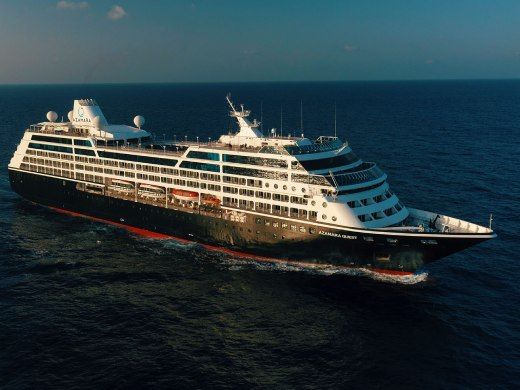
Azamara Cruises - Quest
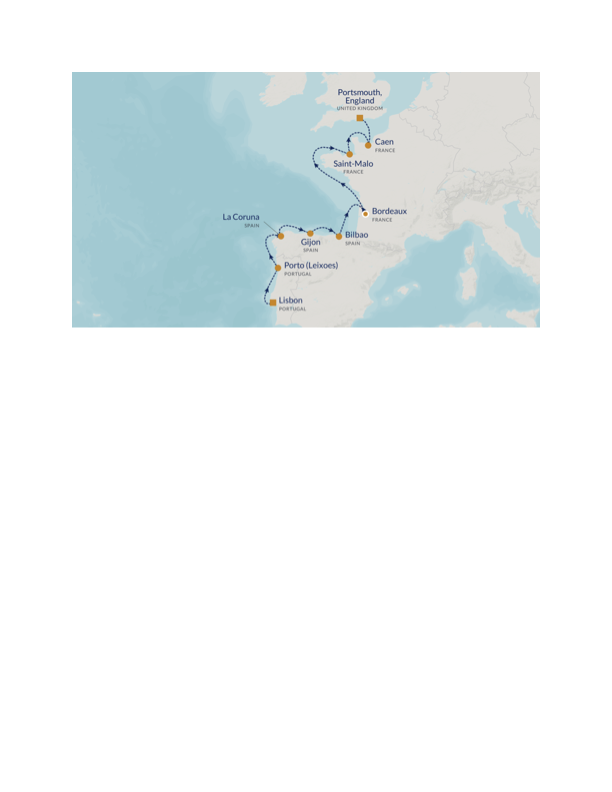
Lisbon • Leixões • La Coruña • Gijón • Bilbao • Bordeaux • Saint-Malo • Caen • Portsmouth
Aquafest Does Not Accept Electronic Transmission of Credit Cards.
Lisbon, Portugal
Portugal’s capital is an 18th-century city - elegant, open to the sea and carefully planned. Its founder is said to be the legendary Ulysses, but the theory of an original Phoenician settlement is probably more realistic. Known in Portugal as Lisboa, the city was inhabited by the Romans, the Visigoths and, beginning in the eighth century, the Moors. Much of the 16th century was a period of great prosperity and overseas expansion for Portugal. Tragedy struck on All Saints’ Day in 1755 with a devastating earthquake that killed about 40,000 people.
The destruction of Lisbon shocked the continent. As a result, the Baixa (lower city) emerged in a single phase of building, carried out in less than a decade by the royal minister, the Marques de Pombal. His carefully planned layout of a perfect neo-classical grid is still evident and remains the heart of the city. In the Belem suburb, which survived the destruction, and the old Moorish section of the Alfama sprawling below the castle of St. George, there are still remains of pre-quake Lisbon.
Lisbon is a compact city on the banks of the Tagus River. Visitors find it easy to get around as most places of interest are within easy walking distance. There is a convenient bus and tram system; taxis are among the cheapest in Europe. Rossio Square, the heart of Lisbon since medieval times, is an ideal place to start exploring. A fire in 1988 destroyed parts of the historic neighborhood behind Rossio. Many of the rebuilt houses emerged with the original façades but provided stores and restaurants with modern interiors. High above the Baixa is the Bairro Alto (upper city) with its teeming nightlife. The easiest way to connect between the two areas is via the public elevator built for the city by Gustave Eiffel.
There are a good many monuments and museums, such as the San Jeronimos Monastery, the Royal Coach Museum and the Gulbenkian Museum, that should be on any visitor’s itinerary. Cruising up the Tagus River to the Port of Lisbon, two well-known landmarks, the Monument to the Discoveries and the Tower of Belem, are passed. Travelers are greeted by the statue of Christ looming above Europe’s longest suspension bridge.
Porto (Leixoes), Portugal
At the mouth of the Rio Douro lies the city of Porto, known mostly for its port wine, but with origins dating back to the 5th century, there is plenty to see such as the Ribeira neighborhood along the river.
La Coruna, Spain
You would be hard-pressed to find a city more shaped and impacted by the sea than La Coruna, Spain. Walk the eight-mile long promenade to see some of the city’s waterfront highlights like the Marina, the Millennium monument, and popular beaches—Orzán and Riazor. The sea also influences the cuisine with delectable fresh seafood like pulpo á feira (octopus and potatoes) and plenty of tapas can be found at bistros throughout the city.
Gijon, Spain
Follow the Cider Trail—a guided tour to some of the best cider houses and restaurants in the city—to get a taste for this important cultural tradition. Gijón has the distinct honor of having the largest number of bakeries per capita in all of Spain. It’s rumored that the best croissant in all the land can be found in this charming city as well.
Bilbao, Spain
If Bilbao wasn't quite a household name, it was transformed with the opening of Frank Gehry's Guggenheim Museum in 1997; now it’s a tourist mecca and showcases the Basque love of food, wine and laughter.
Bordeaux, France
Located 70 miles inland from the Atlantic on the Garonne River, Bordeaux traces its origin to the 3rd century when it was Aquitaine's Roman capital called Burdigala. From 1154 to 1453 it prospered under the rule of the English, whose fondness for the region’s red wines gave impetus to the local wine industry.
Bordeaux even served as the nation’s capital for one year in 1870, for a time at the beginning of World War I, and for two weeks in 1940 before the Vichy government was proclaimed.
Its neo-classical architecture, wide avenues, and well-tended public squares and parks give the city a certain 18th-century grandeur. Excellent museums, an imposing cathedral and a much-praised theater add to the city’s attractions. The principal highlights, clustered around the town center, lie between Place Gambetta and the banks of the Garonne River.
Surrounding Bordeaux are the world-renowned vineyards and châteaux. Visitors from all over the globe come here to learn about the winemaking process - from growing the grapes to harvesting, fermentation and bottling these top-quality wines.
The city’s single most important economic activity is marketing and exporting of Bordeaux wines.
Here in the wine region the title of château can mean anything from a palatial residence to a basic winery. There are thousands of châteaux that rank from very modest family establishments to large famous properties where grapes are raised, fermented and then matured to produce the area’s famous wines.
At Sea
Enjoy the whole day at sea.
Saint-Malo, France
The walled city of St. Malo is a quaint maze of fine old buildings, museums and cafés serving Breton specialties of crepes and cider, where you can stroll along the ramparts and walk the cobblestone streets.
Caen, France
Discover Caen, a captivating Norman port city where centuries-old medieval architecture meets vibrant waterfront charm. Nestled in the heart of Normandy, this picturesque destination invites you to wander cobblestone streets, explore magnificent castles, and immerse yourself in the region's rich heritage. Whether you're drawn to its historic landmarks or modern coastal energy, Caen offers an unforgettable slice of authentic French elegance.
Portsmouth, England, United Kingdom
Step into the vibrant city of Portsmouth. Explore iconic ships like the HMS Victory at the National Musuem of the Royal Navy. Or wander through Gunwharf Quays, a lively waterfront destination filled with designer outlets and trendy restaurants.

Rates are cruise only, per person, based on double Optional transfers, and airfare (unless otherwise stated) additional for all guests. Pricing for 3rd and 4th guests are available upon request and are subject to stateroom category availability. Prices change frequently and are subject to availability at time of booking. Pricing listed may not be able to be combined with promotions/amenities.
All fares are quoted in US Dollars.

4801 Woodway – Suite 145W
Houston, Texas 77056
SUBSCRIBE
© Copyright 2026. All Rights Reserved.
AQUAFEST CRUISES — a division of CruiseCenter.
CST # 2071690-50